A solar proposal is only as reliable as the site measurements, electricity records, structural checks, and utility assumptions behind it. By checking these items first, you can identify roof problems, avoid an incorrectly sized system, compare quotations on equal terms, and know which approvals must be completed before installation.
Key takeaways
- Measure each roof plane separately and mark every obstruction and access path.
- Check roof age, leaks, load capacity, waterproofing, and mounting points before installation.
- Collect electricity bills, sanctioned load, meter details, and utility connection documents.
- Compare system size, warranty, approvals, maintenance, payment stages, and removal terms.
How should you inspect the proposed roof or ground area?
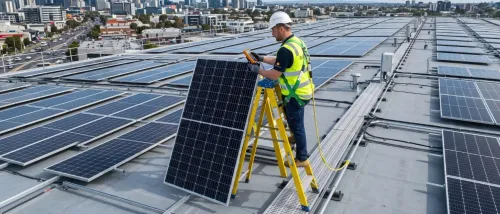
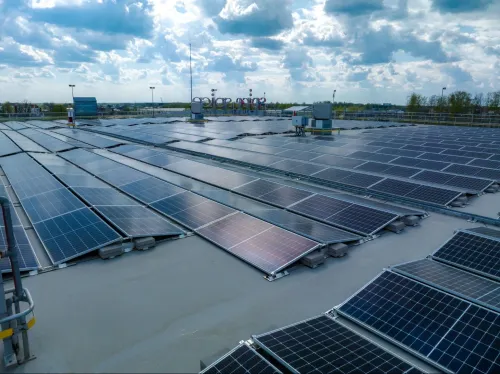
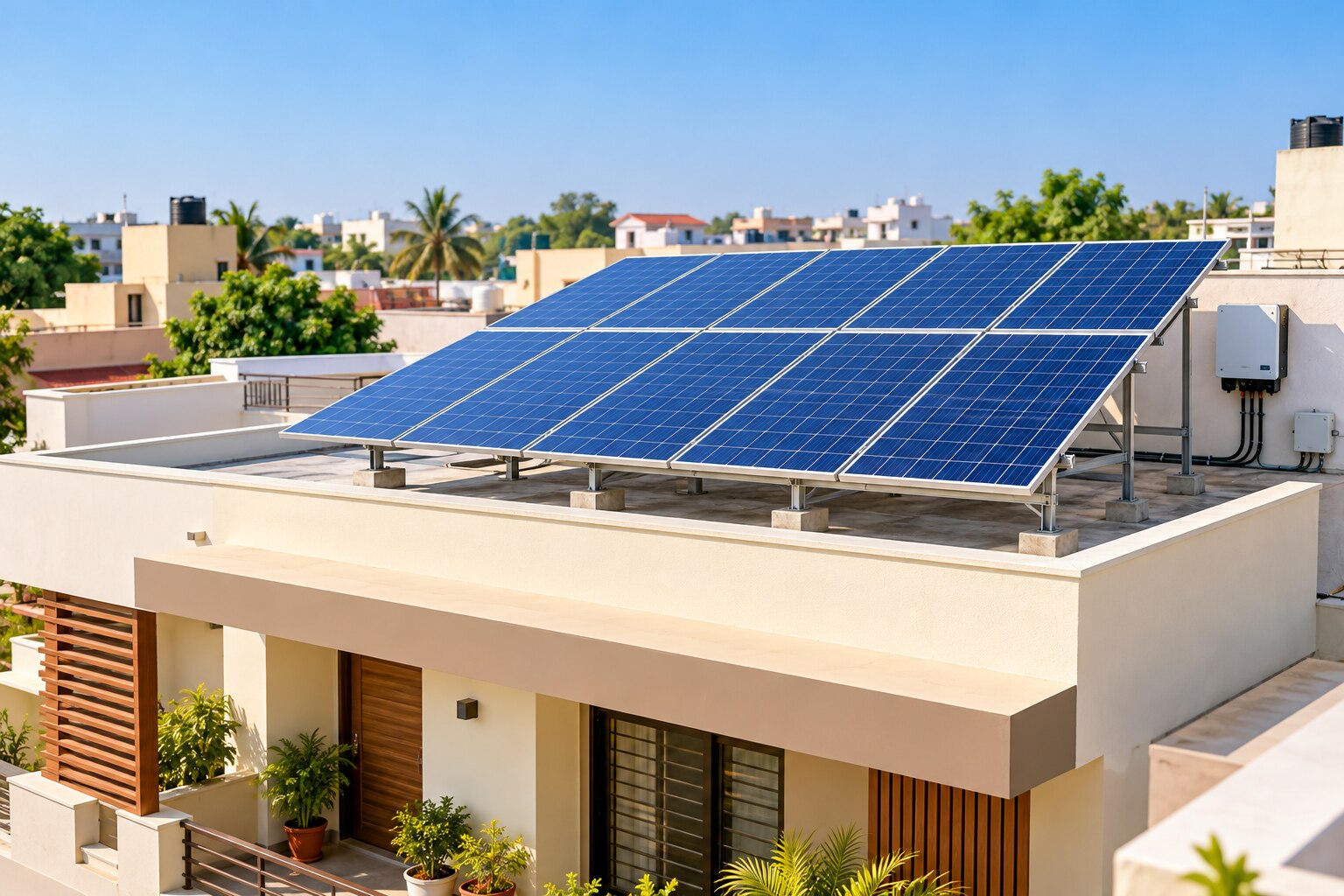
Measure each roof plane or ground area separately, recording length, width, roof orientation, roof pitch, parapet-wall height, roof edges, access paths, and clearances around water tanks, skylights, chimneys, nearby buildings, and trees. Mark unusable sections rather than treating the entire roof as usable roof area.
1. Draw a scaled site sketch. Show panel-free routes for roof access, maintenance, and emergency movement, plus fire-access pathways and setbacks at ridges, eaves, hips, valleys, and roof edges. These rules vary by building and adopted fire code, so a large roof can still provide a small installation area.
2. Complete a solar shading assessment across the year, not only during one site visit. Record shadows from trees, chimneys, parapets, dormers, and neighbouring buildings in morning, midday, and afternoon; include planned tree growth, future construction, additional floors, new tanks, and any roof-access requirements.
3. Ask the designer to model the actual roof planes, orientations, pitches, obstructions, and shade. Panel nameplate capacity is DC output under test conditions, not your delivered energy; inverter clipping, heat, wiring, soiling, conversion losses, shade, and export limits reduce AC production.
Use NREL’s PVWatts as an early-stage production-estimation tool, then compare its assumptions with the installer’s model.
4. For ground arrays, record boundaries, slope, drainage, soil or foundation constraints, fencing, vehicle access, and future land use. Confirm that pathways, setbacks, fire access, and maintenance clearances remain open after panel placement.
How can you confirm that the roof and structure are ready?
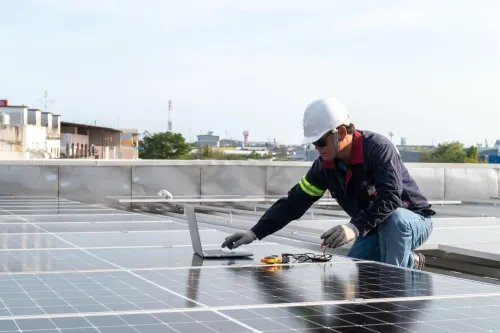
Before accepting a quote, inspect the covering and structure rather than relying on a visual panel layout. Look for cracked or loose tiles, failed waterproofing, corrosion, existing leaks, ponding water, and loose fasteners. Ask for the roof covering’s age and remaining service life.
1. Arrange a roof condition assessment for older roofs, uncertain construction, visible damage, or coverings that may need replacement during the array’s service life. Consider reroofing first; removing and reinstalling panels later adds cost and creates new penetration risks.
2. Require a roof structural assessment showing the array’s dead load, mounting rails, ballast, concentrated loads, and maintenance loads. The proposal must name the attachment method, rafter or truss connection, penetration-sealing method, and resistance to local wind, seismic, snow, and other site forces.
3. Obtain a structural engineer’s review for unusual framing, weak members, ballasted solar mounting, or missing construction records. Static panel weight alone does not prove the roof can resist uplift or attachment forces.
4. Confirm safe access for maintenance, clear equipment working space, and protected locations for inverters, disconnects, batteries, and junction boxes. Check heat, moisture, flooding, freezing conditions, salt exposure, and weather ratings; a shaded wall or garage may change the design and code requirements.
If leaks, ponding, corrosion, or unsafe access remain unresolved, postpone installation until corrective work is documented.
Which electricity records and service details should you collect?
Collect 12 months of electricity bills, including the latest bill, and mark monthly units, maximum demand, billing period, and tariff. Record the sanctioned load, connected load, service voltage, main-breaker rating, distribution-board space, conductor condition, grounding and bonding arrangement, and records for large loads.
Separate daytime electricity consumption from nighttime use by reviewing interval data or recording meter readings at fixed morning and evening times. Mark seasonal changes, such as higher air-conditioning use before the monsoon or winter heating, and date the record, for example daytime electricity consumption on 2026-10-15.
Add planned loads: air conditioners, heat pumps, pumps, electric-vehicle chargers, and production equipment.
Do not compare quotes by panel capacity alone.
| Measure | What it tells you |
|---|---|
| DC panel capacity | Module nameplate output under laboratory conditions |
| Expected AC energy | Annual electricity after inverter clipping, temperature, wiring, soiling, shading, conversion losses, and export limits |
Ask for the modelling assumptions and expected annual AC production. Then compare the tariff: time-of-use prices, demand charges, fixed charges, minimum bills, and export credits. Exporting one kilowatt-hour can be worth less than avoiding one purchased kilowatt-hour, so the daytime load profile affects system value.
A large planned load can also require a load calculation, service upgrade, or revised connection design.
Which system and utility arrangement matches the property’s actual needs?
A grid-connected system suits properties that can use solar in daylight and remain connected to the utility. Choose battery backup for outage protection, or a hybrid solar system when you need both grid export and stored energy.
| Option | What it means | Design consequence |
|---|---|---|
| Whole-property backup | Keeps nearly every circuit operating | Larger inverter, transfer equipment, battery, and possibly a service upgrade |
| Selected-load backup | Runs named circuits such as refrigeration, lights, pumps, or internet | Requires a backed-up panel and a smaller, targeted system |
| Solar self-consumption | Uses solar immediately without promising outage supply | Battery is optional; savings depend on daytime demand and export credits |
List the circuits that must operate during an outage, their starting loads, and the required hours. Battery capacity in kilowatt-hours states stored energy, not available power in kilowatts or backup duration; inverter output, battery discharge limits, load size, and reserve settings determine both.
Ask the designer to identify the inverter, transfer switch, backed-up panel, battery, protection devices, and service connection. For net metering Maharashtra 2026-10-15?, verify the local DISCOM’s current process, export limit, meter change, protection requirements, fees, inspection sequence, and any distribution-system study or transformer upgrade.
Confirm who submits the application and energisation documents. Building or electrical inspection approval does not equal utility permission to operate; do not export power before the DISCOM authorises interconnection.
What documents and quotation terms should you compare before signing?
Ask for these solar installation documents before accepting a design:
- Latest electricity bill, 12 months of bills, sanctioned load, ownership or occupancy proof, and roof-access permission.
- Roof and electrical photographs, property drawings, and details of planned construction, new floors, appliances, machinery, pumps, or other major loads.
- Main electrical-panel and service information, including voltage, breaker rating, and available space.
A fair solar quotation comparison requires more than the system’s DC size. Check that the proposal names:
| Item | What the quotation must identify |
|---|---|
| Generation | Panel wattage and technology, inverter type and capacity, expected annual AC production, and modelling assumptions |
| Installation | Mounting material, cabling, overcurrent protection, disconnects, earthing and lightning protection |
| Operation | Monitoring access, equipment locations, maintenance, and replacement labour |
| Responsibility | Permits, inspections, utility submissions, rejected work, commissioning, and permission to operate |
The contract must state product, inverter, solar workmanship warranty 2026-10-15?, and roof-penetration warranty terms. It must also explain who pays for inverter replacement labour and what remedy applies if production falls below the estimate.
Ask Ms365 Solar Solution to put these site-specific details in a written proposal. Do not compare quotations by panel capacity or headline price alone; compare the equipment, predicted AC energy, exclusions, monitoring access, and responsibilities line by line.
A permit approval does not equal utility permission to operate, so the contract must identify who obtains final grid authorization.
Related products
 | Solar Panel System Solar Panel System in Nagpur View product → |
 | Residential solar power system Residential solar power system Residential solar power system in Nagpur View product → |
Frequently asked questions
How should you inspect the proposed roof or ground area?
Measure every roof plane or ground section separately. Record length, width, orientation, pitch, parapet height, access routes, roof edges, and clearances around tanks, skylights, chimneys, buildings, and trees. Mark unusable sections instead of counting the entire surface.
How can you confirm that the roof and structure are ready?
Check for leaks, cracks, corrosion, loose tiles, damaged waterproofing, and difficult access. Ask for a structural assessment when the roof is old, visibly damaged, or receiving a substantial mounting load. Confirm how installers will seal penetrations and protect the waterproofing.
Which electricity records and service details should you collect?
Gather recent electricity bills, the consumer number, meter number, sanctioned load, tariff category, phase type, and utility name. Record monthly consumption and note whether the property has a backup generator, battery, or frequent power cuts.
Which system and utility arrangement matches the property’s actual needs?
Compare grid-connected, hybrid, and off-grid systems against your load profile and outage needs. A grid-connected system suits bill reduction where utility export approval is available; a hybrid system adds battery backup; an off-grid system requires batteries sized for the loads you cannot interrupt.
What documents and quotation terms should you compare before signing?
Compare the equipment model numbers, system capacity, inverter type, mounting material, estimated generation method, warranty periods, workmanship coverage, approvals, taxes, payment stages, commissioning date, maintenance scope, battery replacement terms, and who handles utility paperwork.
Related products
 | Solar rooftop system Solar rooftop system in Nagpur View product → |
 | commercial power solar system commercial power solar system View product → |
 | Industrial power solar system Industrial power solar system View product → |
 | on grid solar system on grid solar system in Nagpur View product → |