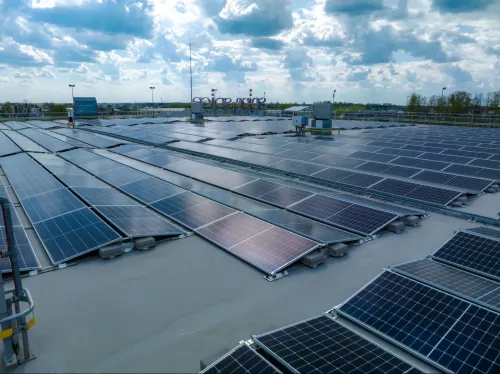
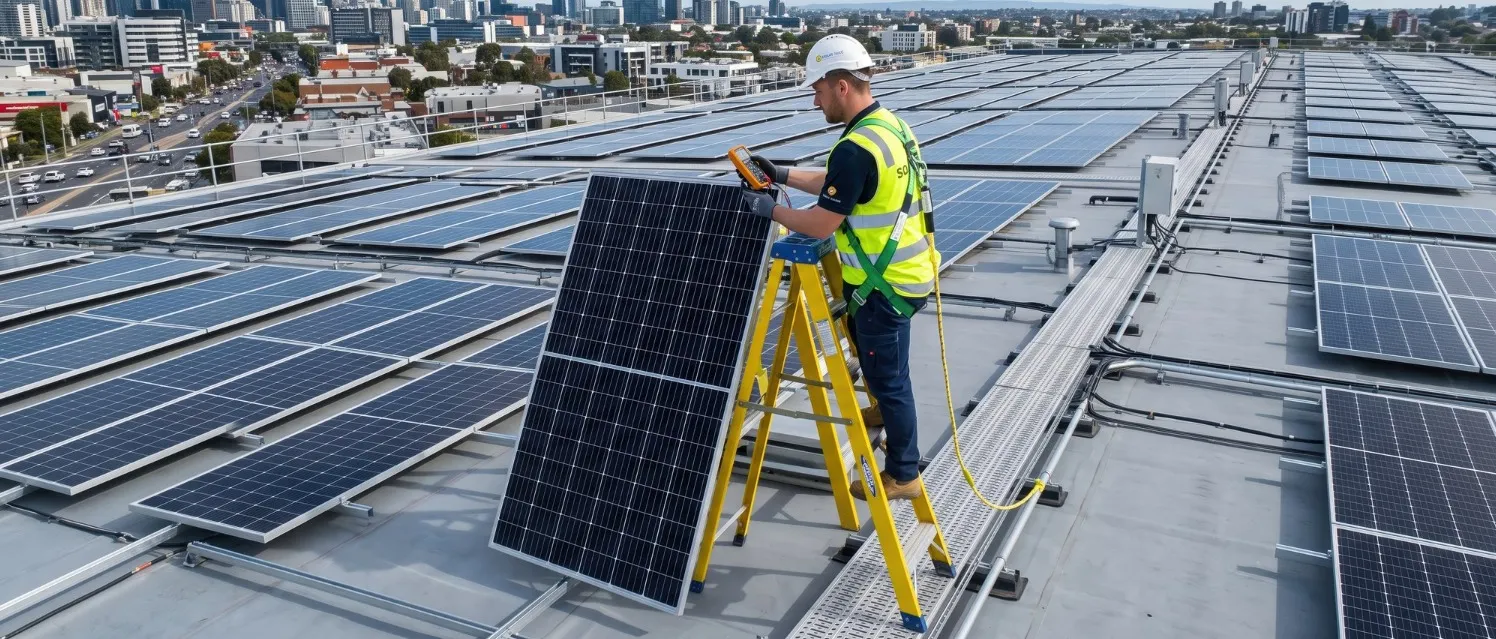
Electricity is a recurring operating expense for offices, retail spaces, warehouses, hospitals, hotels, educational institutions, and other commercial properties. As businesses evaluate ways to manage long-term energy costs, Commercial Solar Panel Installation has become an option worth assessing wherever adequate installation space and suitable consumption patterns are available.
For commercial property owners in Nagpur, the decision should be based on energy data and site feasibility rather than on a generic assumption that every building requires the same solar capacity.
Look at When the Business Uses Electricity
Commercial properties often operate heavily during daylight hours.
Air conditioning, computers, refrigeration, elevators, lighting, machinery, and other equipment may be active at the same time solar panels are producing electricity.
This can allow generated solar energy to contribute directly to operating loads.
Businesses should review historical electricity bills and, where possible, understand their daytime load profile before determining capacity.
Calculate Usable Roof Space
A large building does not automatically have a large usable solar roof.
Commercial rooftops may contain:
- HVAC systems
- Water tanks
- Service equipment
- Staircase structures
- Ventilation units
- Communication equipment
- Fire and maintenance pathways
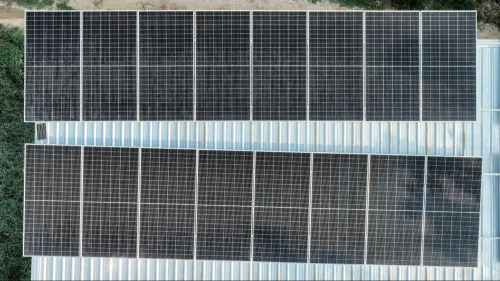
Solar panels need to be arranged around these elements while minimizing shading and maintaining necessary access.
Evaluate the Investment With Real Numbers
Business owners commonly ask how quickly solar will recover its initial cost.
There is no universal answer.
Financial outcomes can depend on:
- Installed system cost
- Electricity consumption
- Applicable electricity tariff
- Solar generation
- Self-consumption level
- Equipment performance
- Maintenance expenses
- Current policy provisions
A realistic financial analysis should use site-specific inputs rather than broad savings claims.
Consider How Long the Business Will Use the Property
Solar installations are long-term assets.
A company that owns its premises may evaluate the project differently from a tenant operating under a short lease.
For rented commercial properties, discussions about roof rights, ownership of equipment, maintenance responsibilities, and lease duration should happen before installation.
Check Whether Future Consumption Will Change
Commercial energy demand rarely remains fixed indefinitely.
A business may add air-conditioning units, expand office space, install new machinery, increase operating hours, or add electric vehicle charging.
Known expansion plans can influence system sizing.
At the same time, installing excess capacity purely for uncertain future demand may not always be the most efficient use of capital. Planning should balance present consumption with reasonably predictable growth.
Compare Quotations on More Than Price
Commercial projects should be evaluated according to complete system value.
Decision-makers should compare:
- Module specifications
- Inverter configuration
- Mounting structure
- Electrical protections
- Installation methodology
- Monitoring
- Warranty terms
- Maintenance requirements
- Expected generation assumptions
A lower project price has limited meaning if important components or services have been excluded.
Signs a Business Is Ready to Explore Solar
A commercial property may be ready for a detailed solar assessment when it has significant electricity bills, consistent daytime operations, suitable rooftop or open space, long-term occupancy, and an interest in reducing dependence on conventional electricity.
Ms365 Solar Solution works with businesses in Nagpur to assess commercial solar requirements according to property conditions and energy consumption.
For organizations across Maharashtra, solar should be approached as an energy investment rather than a standalone equipment purchase. When technical feasibility, electricity usage, project economics, equipment quality, and long-term operational plans are assessed together, business owners can decide whether the installation genuinely fits their facility.
Keywords