A solar fence protects a boundary only when its energizer, earth-return circuit, conductors, gates and alarm path work together under real site conditions. You will be able to map the perimeter, specify the system, identify likely failure points and create a maintenance routine that keeps the boundary effective through dust, monsoon growth, animal contact and power interruptions.
Key takeaways
- Map corners, gates, access points and earthing locations before selecting equipment.
- Match energizer output, battery capacity and fence length to the site.
- Use warning signs, insulated gates and tested earthing to prevent unsafe faults.
- Inspect vegetation, wire tension, voltage and battery condition on a schedule.
Trace the pulse from solar panel to boundary wire
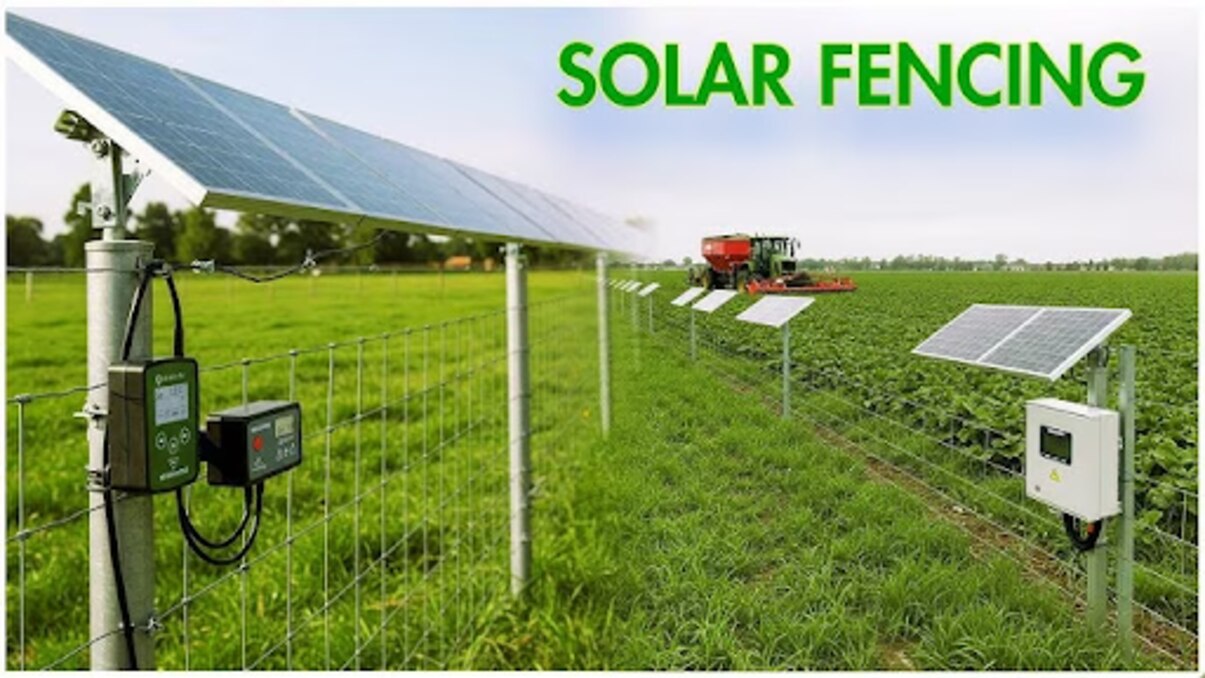
A solar panel charges a battery during daylight, and the battery supplies the energizer after sunset or during cloudy weather. The energizer converts that stored energy into a high-voltage, short-duration electric fence pulse, then sends it along the boundary and receives the return through the earthing system.
- Fence conductors carry the pulse around the perimeter.
- Insulators keep the conductors separated from posts, soil and metal structures.
- The earthing system provides the return path when a person or animal touches a conductor.
- Gate connections use insulated, flexible leads so opening the gate does not break the protected circuit.
- Warning signs identify the fence as electrified and warn people not to touch it.
The energizer must be designed for electric fences, not improvised from a general-purpose high-voltage supply. Choose equipment tested to IEC 60335-2-76; adding a solar panel or battery does not make an unsuitable energizer safe.
The key difference from a continuously live wire is timing. A solar fence delivers separated pulses, leaving intervals between them, while a continuously energised wire can drive current for as long as contact continues. That pulsed design limits delivered energy, but it does not make careless installation harmless.
A power light proves only that the energizer has supply. A broken conductor, loose jumper, corroded terminal, failed earth electrode, flat battery or vegetation leakage can leave the fence live yet ineffective. Check the fence-voltage indicator at a distant point, and add low-battery and tamper alerts where a missed breach would matter.
Plan every corner, gate and access point before choosing equipment
Draw the irregular boundary on a site plan before selecting equipment. Mark every change in direction, slope, gate, drain, road crossing, shared property line and service entrance. Then divide the route into fence zones, each with a defined start, return path and fault-monitoring point; a single break will not hide inside the whole perimeter.
- Walk the line and flag corners, steep slopes and low sections where wires could sag or become climbable.
- Mark protected access points for people, vehicles, emergency services and maintenance crews.
- Design each gate as part of the circuit. Use an insulated flexible connection or a planned underground crossing, and keep gate handles away from accessible live conductors.
- Route crossings around drains and roads so water, vehicles and future earthworks cannot damage the fence or create an unprotected bypass.
| Boundary feature | Layout decision | Gap to prevent |
|---|---|---|
| Corners | Place posts so the conductor follows the turn without a wide inside angle | A person stepping around the corner |
| Slopes | Set posts to maintain wire height and spacing along the grade | Low wires or climbable gaps |
| Gates | Isolate the gate zone with switching and a proper flexible lead or crossover | A visibly fenced but electrically bypassed opening |
| Drains, roads and shared property lines | Confirm ownership, access and crossing details before installation | A disputed or physically inaccessible section |
Keep maintenance access inside the plan. Leave room to clear vegetation, reach connectors and inspect distant points; a shaded panel, loose joint or overgrown wire can disable a zone long before the energizer’s power light changes.
Match fence geometry and solar capacity to the site
A farm usually needs geometry that protects livestock and wildlife without creating entanglement; an industrial property needs a higher, harder-to-climb barrier with controlled access. Set each conductor so an animal cannot touch two wires or a live wire and earth at once.
| Site | Fence geometry | Power design |
|---|---|---|
| Farm | Choose fence height for the animals present, then set wire spacing to block crawling, pushing or jumping. Use the number of strands needed for that species and terrain, not a fixed count. | Select energizer capacity by the required joule rating and the manufacturer-rated fence length, then allow for vegetation, long runs and imperfect grounding. Size battery size for night operation and several low-sun days. Set solar-panel rating from daily demand, usable peak-sun hours and system efficiency. |
| Industrial property | Use greater fence height where climbing is the threat, close wire spacing on the approach side, and a higher number of strands across the vulnerable zone. Keep gates, service routes and fire access clear. | Choose energizer capacity for the complete perimeter, monitoring equipment and leakage margin; never infer reach from joules alone. Use battery size and solar-panel rating to maintain solar autonomy through the site’s selected low-sun period, with extra allowance for shading and battery aging. |
Calculate solar autonomy with local peak-sun hours, not daylight duration. A remote farm may need more stored days than an industrial site with dependable utility backup, while either site needs a compliant energizer meeting IEC 60335-2-76.
Prevent leakage, unsafe access and storm-related failure
Vegetation clearance is the first defence against voltage loss. Monsoon growth, branches and climbing plants can touch conductors continuously, drain pulses and trigger nuisance trips; clear the fence line regularly rather than fitting a larger battery. Remove dust from solar modules, keep battery terminals dry, and correct waterlogging around the energizer and earth electrodes.
Use this inspection sequence after heavy rain or a storm:
- Look for loose conductors, damaged insulators and poor joints; replace cracked parts and tighten connections.
- Check earthing connections and electrode condition at accessible points. A fence can show a live energizer while delivering a weak boundary pulse if the earth return has failed.
- Fit lightning protection and surge protection according to the equipment manufacturer, with short, sound connections and a separate route from sensitive controls.
- Inspect for wildlife and livestock trapped between live wire and earth, or caught in unsuitable spacing and routing. Reroute around wildlife corridors, nests and animal access paths.
- Install warning boards wherever people, children, visitors or animals could approach, including gates. Follow local electrical, safety and animal-welfare rules for their wording and placement.
| Weakness | Result | Corrective action |
|---|---|---|
| Vegetation or dust | Leakage and nuisance trips | Clear, clean and retest distant points |
| Waterlogging or failed earthing | Weak pulse despite a power light | Improve drainage and repair the earth system |
| Storm surge | Energizer or controller damage | Maintain lightning protection and surge protection |
| Animals or poor access control | Injury, entanglement or unsafe entry | Adjust routing and maintain warning boards |
Commission and maintain the boundary as a monitored security system
A fence can remain live while detection has failed, so test the boundary—not just the energizer—during commissioning. Measure fence voltage at the energizer and at the farthest strand, then measure earth voltage; a large drop points to leakage, a poor connection, or inadequate earthing.
Record these commissioning checks and repeat them at accessible test points:
- Use the fence-voltage indicator to confirm pulse presence at gates, corners, and the remote end.
- Inspect jumpers, connectors, insulators, earth electrodes, warning signs, and gate links for corrosion, looseness, breaks, and accidental shorts.
- Trigger the low-voltage alarm and tamper monitoring; confirm each alert reaches the named person, not only a control panel.
After commissioning, verify battery condition, charging current, panel cleanliness, conductor tension, vegetation clearance, and connection tightness on a schedule. Do not rely on the energizer’s power light. Ms365 Solar Solution can record baseline readings and label test points so later maintenance exposes a gradual decline rather than a complete failure.
Perform a storm inspection after lightning, flooding, or high winds. Test the actual fence again, check displaced posts and damaged insulators, and review cameras and lighting at night. Finish with a response procedure: identify who receives an alarm, who checks cameras, who attends the site, and how you handle a false alarm or confirmed intrusion.
Related product
 | solar fencing solar fencing in Nagpur View product → |
Frequently asked questions
How does a solar fencing system send a pulse around a boundary?
The solar panel charges a battery, the battery powers the energizer, and the energizer sends short high-voltage pulses through the boundary wire. The earthing system provides the return path.
What should you map before installing solar fencing?
Map every corner, gate, vehicle entrance, pedestrian access point, slope, water crossing and location available for the energizer, battery, solar panel and earth electrodes.
How do you size solar fencing equipment for a property?
Match the fence geometry and total wire length with the energizer’s rated capacity, then size the solar panel and battery for night operation, cloudy weather and the site’s maintenance conditions.
How do you prevent leakage and storm damage in an electric fence?
Clear vegetation, use suitable insulators, maintain wire tension, protect cable joints, improve earthing, install warning signs and inspect the system after heavy rain, lightning or strong winds.
What maintenance does a solar boundary fence require?
Check fence voltage, battery condition, panel cleanliness, earthing, wire tension, insulators, gates, warning signs and vegetation at scheduled intervals and after severe weather.