A reliable grid connection removes the need to design solar around daily power cuts, but it does not automatically make a grid-tied system a good investment. You can decide more accurately by checking your daytime electricity use, roof, tariff, export approval, expected occupancy and need for backup.
Key takeaways
- Confirm a reliable grid connection, suitable roof, and daytime electricity demand.
- Size the system against sanctioned load, tariff, and the property’s load profile.
- Check your DISCOM’s net-metering or export approval process before installation.
- Choose batteries when backup power matters during grid outages.
Does the property pass the basic suitability checklist?
A property passes the basic on-grid solar suitability check when it has a reliable grid connection, a workable installation surface, and electricity use that matches solar production. The grid covers shortfalls after sunset or during poor weather; batteries are not required for the standard grid-tied arrangement.
Check these points before requesting a system design:
- Confirm daytime electricity use. Running air-conditioning, pumps, refrigeration, computers, or machinery while the array produces power improves direct solar consumption.
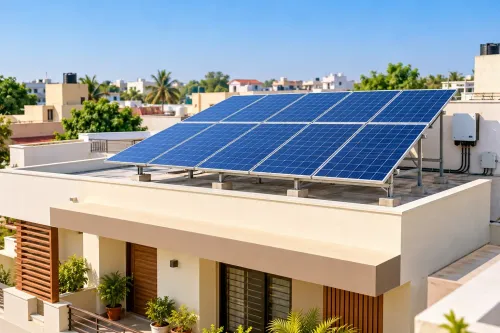
- Measure the usable roof area, not the total roof footprint. Exclude skylights, water tanks, walkways, parapets, and fire-access clearances.
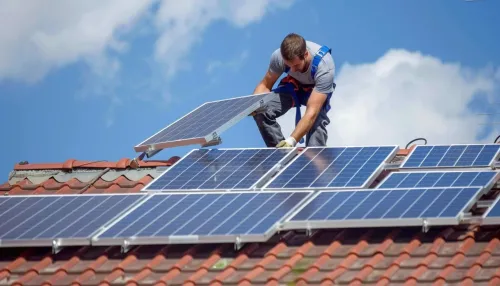
- Inspect roof access and condition. An aging roof can force panel removal and reinstallation after a repair, adding cost that the energy comparison misses.
- Check roof orientation and shading. Nearby trees, taller buildings, and roof structures can reduce output; record shade during morning, midday, and afternoon.
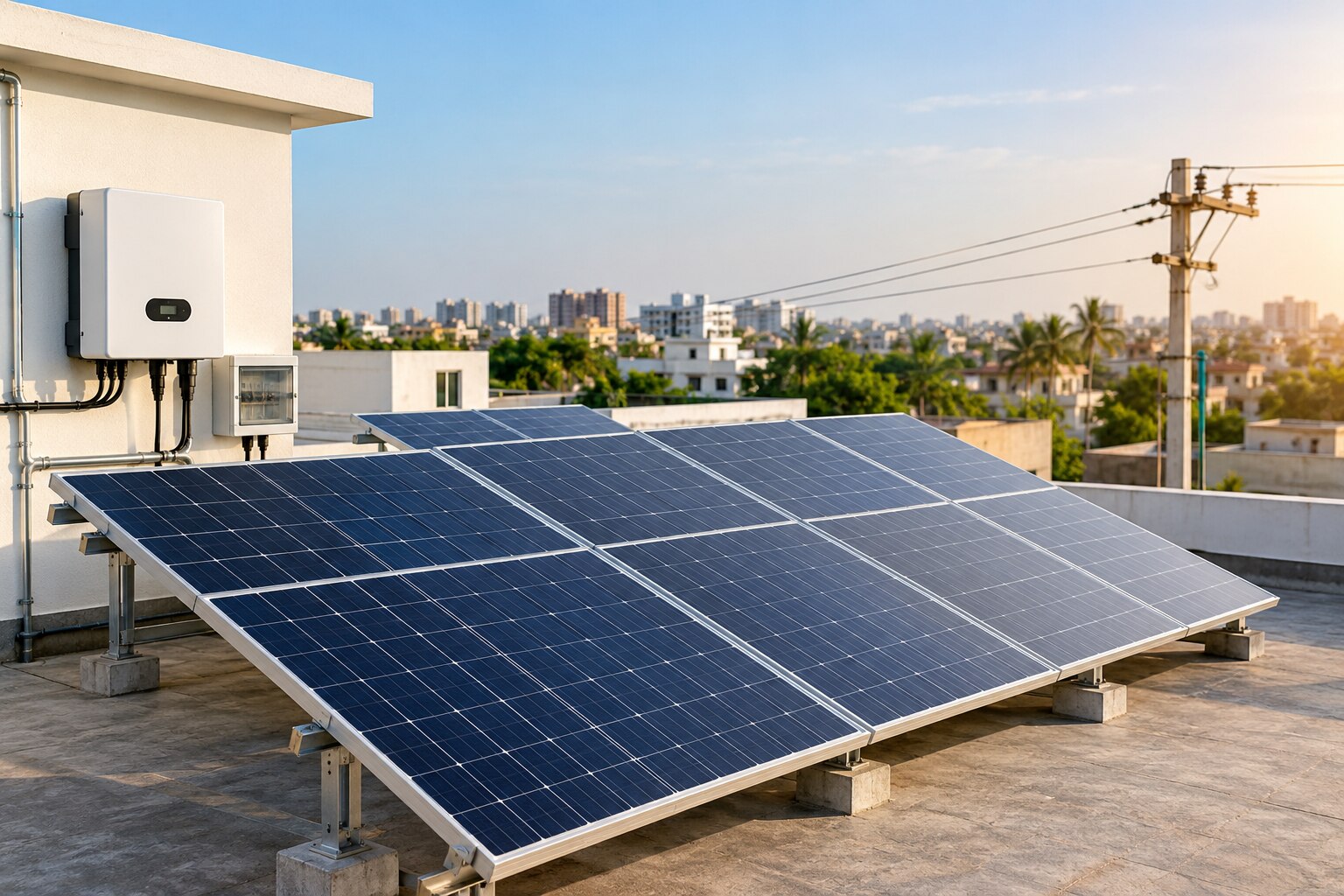
- Verify structural capacity and a safe location for the inverter, isolator, and cables. Keep equipment accessible for servicing and meet emergency-disconnect requirements.
- Confirm the main service panel and sanctioned load can accept the proposed inverter output. Utility approval or a service upgrade may be necessary.
- Consider your expected length of occupancy. The installation process and upfront cost make more practical sense when you expect to use the property for years rather than move soon.
A reliable grid connection alone does not establish on-grid solar suitability. Compare the roof findings with your tariff, evening-heavy consumption, export rules, and available sanctioned load before approving a design.
Will the tariff and load profile support the right system size?
Use solar system sizing from electricity bills as a starting calculation, not a final answer. Collect 12 consecutive bills and record monthly units, billing-period length, electricity tariff, fixed charges and any demand charge. Solar usually reduces energy purchases, not fixed charges or taxes.
Your daytime versus evening consumption determines how much generation you use directly. A property with daytime cooling, pumping, water heating or electric-vehicle charging can justify a larger array than a similar property whose demand peaks after sunset, especially when exported electricity earns less than the retail rate.
- Calculate average monthly and annual consumption from the bills, then identify the months with the highest use.
- Separate the daytime load from evening and overnight use using interval data, smart-meter records or a one-week appliance schedule.
- Check the sanctioned load shown on the bill. Treat it as an interconnection and operating limit to confirm with the utility, not as proof that the property needs a system of that size.
- Model production for the actual location, roof direction, tilt, shading and seasonal weather. PVWatts can estimate output, but it does not replace a site survey or electrical design.
Choose a system that offsets useful on-site consumption without creating excessive surplus. Roof area, shading, seasonal output and utility export limits can reduce the suitable size even when annual usage looks high. Compare the expected reduction in imported units with the installation cost, while keeping enough grid capacity for periods when solar production is low.
How do export rules change the financial case?
Do not credit every kilowatt-hour your panels produce at the retail electricity rate. The financial result depends on how much solar you use behind the meter and what the utility pays for surplus generation.
1. Measure self-consumption by comparing solar production hours with your actual load. Water heating, daytime cooling and electric-vehicle charging can use solar directly, but only if operating them during daylight is safe and practical. On-site use usually has greater value than export when the export credit is below the retail tariff.
2. Confirm the grid export arrangements in writing. Ask whether the property qualifies for net metering, an avoided-cost rate, a feed-in rate, a fixed export credit or no payment for certain exported energy.
Check whether credits expire, roll forward, or settle annually, and identify fixed charges, demand charges, minimum bills and taxes that solar will not remove.
3. Obtain interconnection approval before ordering a system. The utility may require an application, technical review, inspection, a bidirectional meter and written permission to operate. Exporting electricity before permission to operate can breach the interconnection agreement.
4. Compare annual savings using hourly consumption, seasonal solar output, roof orientation, shading, export limits and the approved compensation rate. Do not size the array from annual consumption alone; two properties with identical yearly use can have different suitable systems.
A reliable grid connection often makes batteries unnecessary for basic bill reduction, but storage can increase self-consumption where export is restricted. Include its purchase cost, conversion losses, maintenance and future replacement before treating stored solar as a saving.
Is grid-tied solar enough if outages are the main concern?
If outages are rare and your priority is reducing electricity purchases, choose standard on-grid solar. A conventional inverter stops supplying the property when the grid fails because anti-islanding protects utility workers, so the panels cannot provide solar during a blackout on their own.
| Option | What it provides during an outage | When it applies |
|---|---|---|
| Standard on-grid solar | No power after the grid disconnects | Reliable supply, savings are the main goal |
| Battery-backed solar | Backup for selected circuits through an islanding-capable inverter | Short or recurring outages justify extra cost |
| Off-grid solar | Independent power from solar, batteries and usually a generator | No usable grid connection or prolonged outages are unavoidable |
Choose battery backup when you need lights, refrigeration, internet equipment, pumps or medical devices to keep running. Ask the installer to identify the backed-up circuits, battery capacity in kilowatt-hours, maximum output in kilowatts and expected runtime; whole-property backup costs more than protecting a small essential-load panel.
A battery also adds inverter losses, controls, maintenance and eventual replacement. If outages last for days, size the system for poor-weather production rather than one evening.
Choose off-grid solar only when grid service is unavailable, unsafe or too unreliable to justify its connection cost. An off-grid solar comparison must include batteries, generator support, winter or monsoon output, load limits and daily energy management—not just panel capacity.
What should you verify before approving the installation?
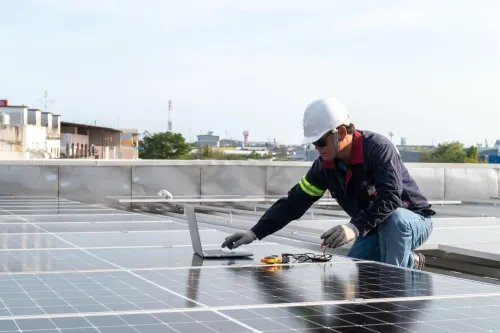
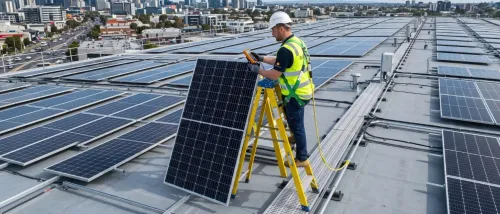
Approve the project only when the evidence covers both the property and the agreement: a PVWatts estimate is not approval. A site survey must confirm roof age, condition, usable area, shading, maintenance access, equipment locations, emergency-disconnect position, and structural capacity. Replacing an old roof after installation can add panel removal and reinstallation costs.
- Match the array’s DC nameplate capacity with the inverter AC rating, proposed system losses, and the main service panel’s available capacity. DC-to-AC oversizing can improve low-light production but clips output at midday.
- Confirm the sanctioned load, panel rating, protection equipment, cable routes, grounding, and utility interconnection requirements with a licensed designer.
- Get the utility application, technical review outcome, inspection requirement, bidirectional-meter requirement, and written permission to operate. Do not export power before permission to operate.
- Check the contract for equipment models, workmanship warranty, roof penetrations, monitoring, generation assumptions, exclusions, payment stages, and who pays for upgrades.
- Compare the projected bill using the actual tariff, fixed charges, demand charges, minimum bills, taxes, self-consumption, and export-credit rate.
| Check | Ask for | Risk if missing |
|---|---|---|
| Design | Signed single-line diagram and inverter AC rating | Panel or protection mismatch |
| Production | PVWatts estimate plus survey assumptions | Inflated savings forecast |
| Interconnection | Utility approval path and permission-to-operate responsibility | Installed system cannot legally export |
Ms365 Solar Solution should provide these documents before you approve an on-grid proposal, not after installation begins.
Related products
 | on grid solar system on grid solar system in Nagpur View product → |
 | commercial power solar system commercial power solar system View product → |
Frequently asked questions
Does a property pass the basic on-grid solar suitability checklist?
Check for a reliable grid connection, an unshaded installation surface, structurally suitable mounting points, and electricity use that aligns with daytime solar generation.
Will the tariff and load profile support the right system size?
Compare your monthly bills, sanctioned load, daytime consumption, and tariff with the proposed system size. A large system is a poor fit when most electricity is used after sunset.
How do export rules change the financial case?
Ask your distribution company, or DISCOM, about net metering, gross metering, export limits, application documents, and approval timelines before calculating savings.
Is grid-tied solar enough if outages are the main concern?
No. Standard grid-tied solar shuts down during a power cut for safety. Choose a battery-backed hybrid system or another backup supply when outage protection is essential.
Related products
 | Industrial power solar system Industrial power solar system View product → |
 | Solar rooftop system Solar rooftop system in Nagpur View product → |
 | Residential solar power system Residential solar power system Residential solar power system in Nagpur View product → |