A household’s occupant count does not reveal how much hot water it uses at 7 a.m., when showers, kitchen work, and laundry can compete for the same stored supply. By measuring daily volume and peak timing, then checking storage, collector area, winter output, and backup heating together, you can choose a capacity that matches real use instead of buying by tank size alone.
Key takeaways
- Measure hot-water use for seven days, including the busiest morning or evening.
- Choose tank capacity from actual demand, not household size alone.
- Check winter output, mixed-water volume, roof conditions, and backup heating.
- Compare collector type, maintenance needs, warranty, and every quote line by line.
1. Measure Your Household’s Daily and Peak Hot-Water Demand
A household’s daily hot-water demand is the total volume used at the required temperature, not simply the number of occupants. Measure actual use for at least seven days, then identify the busiest morning or evening period separately. That peak demand matters when several outlets operate together.
- Record each occupant’s shower duration. Measure shower flow rate by collecting water for 30 seconds and doubling the litres collected to get litres per minute; multiply that figure by shower duration.
- Measure bath volume, or estimate it from the tub’s filled level and record how many baths occur each day.
- Record hot water used at kitchen and utility sinks by measuring the litres discharged during a typical washing period.
- Record dishwasher and laundry cycles that use hot water, using the appliance manual’s water-consumption figure when available.
- Note guests, domestic help, unusually long showers, and days when several people bathe within the same two-hour window.
Add every measurement for each day. Divide the seven-day total by seven to find average daily hot-water demand, then keep the highest day as a stress check. For peak demand, add the litres used during the busiest overlapping period rather than averaging those uses across the whole day.
Do not multiply a person-based allowance without checking your measurements. A two-person home with high-flow, 15-minute showers can use more hot water than a four-person home with short showers. Record pipe losses separately if the tank sits far from the bathrooms.
2. Match Measured Demand to a 100, 150, 200, or 300-Litre Tank
Use measured litres, not occupant count, to size storage. Take your seven-day average and identify the heaviest continuous demand window, such as 6–8 a.m. Choose a tank that covers the combined draw during that window; a household using 100 litres across the day can still need more storage if 120 litres are drawn before breakfast.
Convert your notes in this order:
- Total the hot-water volume used each day.
- Total the volume used during the busiest morning or evening period.
- Compare both figures with the tank options below.
- Move up one size when the peak draw reaches the tank limit, or when guests regularly add demand.
| Tank option | Measured demand it suits | Peak-demand check |
|---|---|---|
| 100-litre solar water heater | Up to about 100 litres per day | Keep the concentrated draw below 100 litres |
| 150-litre solar water heater | About 100–150 litres per day | Suitable when one busy period approaches 150 litres |
| 200-litre solar water heater | About 150–200 litres per day | Better for several simultaneous showers |
| 300-litre solar water heater | About 200–300 litres per day | Use for high daily demand or large morning peaks |
These are starting points, not guarantees of uninterrupted supply. If three showers together require 120 litres, a 100-litre tank is undersized even when the household’s daily total is only 100 litres. A larger tank also gives the backup heater more time to recover after a concentrated draw.
3. Check Usable Mixed Water, Winter Output, and Solar-Site Conditions
A 200-litre tank does not provide 200 litres of usable hot water at the tap. If solar heating raises stored water above the delivery temperature, a tempering valve mixes it with cold water and produces more usable mixed water while reducing scald risk.
The result depends on storage temperature, incoming cold-water temperature, pipe losses, and tank insulation.
| Condition | Effect on usable hot water | What to check |
|---|---|---|
| Hot tank plus tempering valve | More mixed water from the same tank volume | Confirm the valve’s delivery setting and safe operation |
| Nagpur winter | Colder incoming water and weaker solar gain reduce delivered volume | Ask for winter output and backup-heater performance |
| Cloudy period | The tank may not recover fully between uses | Check the recovery time and backup control |
| Long pipe run or recirculation | Heat is lost before water reaches the tap | Keep the tank near demand, insulate pipes, and use timed or demand-controlled recirculation |
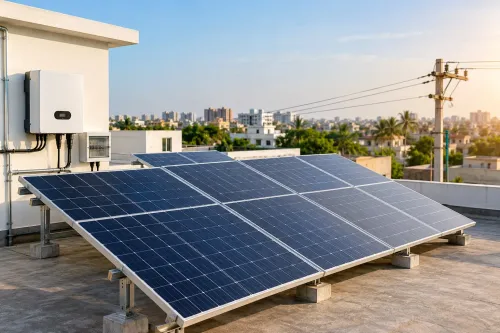
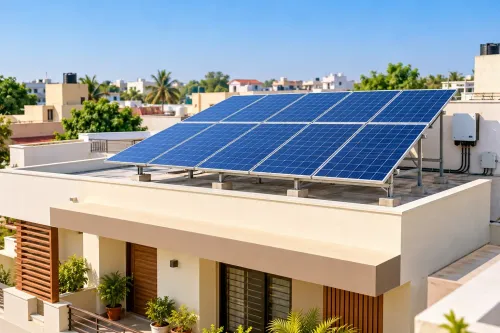
| Shaded or poorly placed collector | Less heat reaches the tank | Inspect shade, roof direction, usable roof space, and collector access |
Treat the labelled tank size as storage, not a daily guarantee. Request the expected usable hot water at about 49°C, not only the tank’s nominal litres, and ask how the figure changes after a cloudy day.
Size collector area and storage together. Adding collectors to cover rare high-demand days can cause summer overheating or stagnation, while undersizing leaves backup heating to carry winter demand. A system’s certified annual performance, such as an SRCC OG-300 rating, gives a better comparison than collector area alone.
4. Choose Collector and System Type for Your Water Quality and Use Pattern
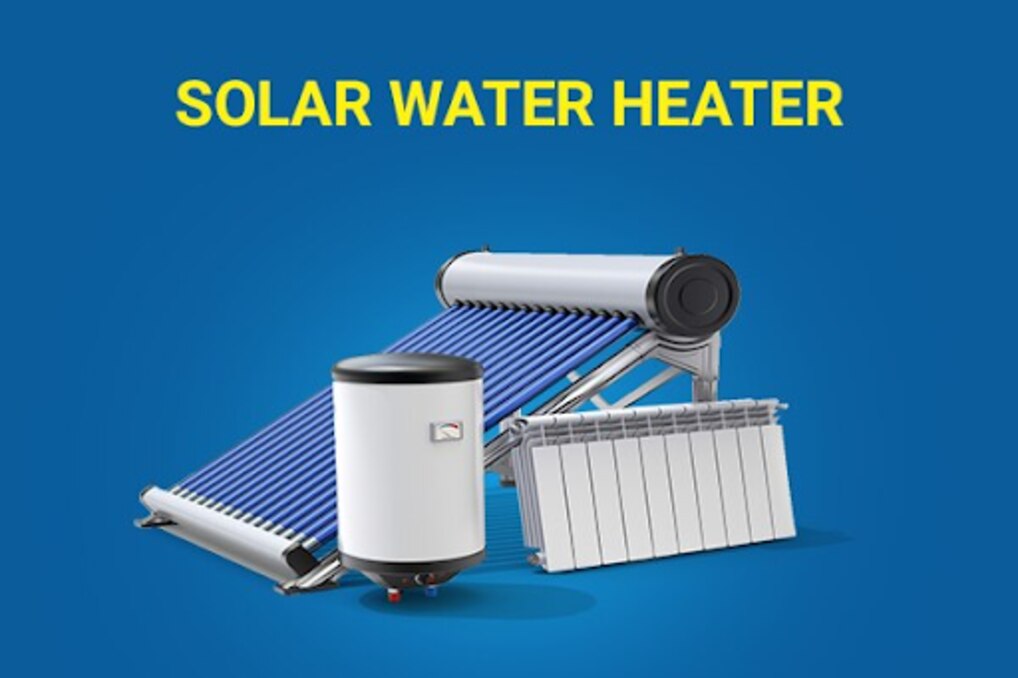
Choose a flat-plate collector for a durable, simpler system in strong sun and moderate climates; choose an evacuated-tube collector when winter performance, limited roof area, or cloudy conditions matter more. Hard water can scale passages, heat exchangers, and tanks, so ask how the design will be cleaned and serviced before comparing prices.
| Option | Main advantage | Main trade-off or best fit |
|---|---|---|
| Flat-plate collector | Rugged, simple construction and easier cleaning | Needs adequate roof area; suits sunny locations and treated water |
| Evacuated-tube collector | Strong heat retention and good low-temperature performance | Tubes are more fragile; replace damaged tubes and check seals |
| Active solar water heater | Pumps and controls move heat where demand is located | Uses electricity and adds pump and control failures |
| Passive solar water heater | No circulation pump, with fewer electrical parts | Needs correct tank elevation, pipe layout, roof loading, and climate |
Protect exposed piping wherever freezing is possible. A closed-loop system circulates antifreeze through collectors and transfers heat through a heat exchanger; inspect or replace the fluid on the maker’s schedule. A drainback system empties collector piping when the pump stops, but it needs correctly sloped pipes and a suitable drainback tank.
An ordinary open-loop system can burst if water remains in the collector during a freeze.
Place the tank near the main hot-water demand, insulate every hot-water and solar pipe, and use timed or demand-controlled recirculation. A long, continuously heated loop can waste collected heat. Compare complete-system performance, including backup heating, pump energy, tank losses, maintenance, and freeze protection—not collector area alone.
5. Compare Performance, Backup, Maintenance, and the Installer’s Quote
Accept the quote only after the installer explains delivered performance, not just collector area or tank volume. A realistic system supplies a share of annual demand, while the backup heater covers cloudy weather, winter mornings, and unusually heavy use.
| Check | Verify | Why it matters |
|---|---|---|
| Performance | Annual output and solar fraction, plus an SRCC OG-300 rating for the complete system | Collector area alone hides tank losses, pump energy, controls, and heat-exchanger performance |
| Backup | Backup heater type, capacity, control setting, and recovery rate | A small backup can leave several users waiting after a peak-demand period |
| Water quality | Heat-exchanger material, sacrificial anode, filtration, and the descaling interval | Hard-water scaling reduces heat transfer and can block valves or pipes |
| Maintenance | Antifreeze inspection or replacement, pump service, relief-valve testing, and tank access | Ignoring these items turns a low operating-cost system into an expensive repair |
| Installation | Pipe insulation, tank location, freeze protection, and recirculation controls | Long uninsulated runs and continuously operating loops waste collected heat |
| Quote | Separate prices for commissioning, controls, supports, service visits, replacement parts, and disposal | A collector-and-tank quote can conceal the lifecycle cost |
Ask Ms365 Solar Solution to show the incoming-water temperature and household heat-load calculation behind its recommendation, then compare the proposed annual output with your actual demand. Reject any promise of 100% solar supply without a clearly sized backup heater.
Get the warranty terms in writing, including labour, tank, collector, pump, controls, and exclusions for hard-water scaling.
Related product
 | solar water heater solar water heater in Nagpur View product → |
Frequently asked questions
How do you measure a household’s daily hot-water demand?
Record the hot-water volume used at each outlet for at least seven days, then total the daily use and identify the busiest morning or evening period.
How do you choose between 100, 150, 200, and 300-litre solar water heater tanks?
Match the tank to measured daily and peak demand, then adjust for winter output, usable mixed water, and whether several outlets run together.
What solar water heater site conditions should you check?
Check roof space, orientation, shading, pipe runs, structural support, winter sunlight, and the system’s usable mixed-water volume.
What should you compare in a solar water heater installer’s quote?
Compare collector and system type, winter performance, backup heating, tank and component specifications, maintenance requirements, warranty terms, and installation work.