


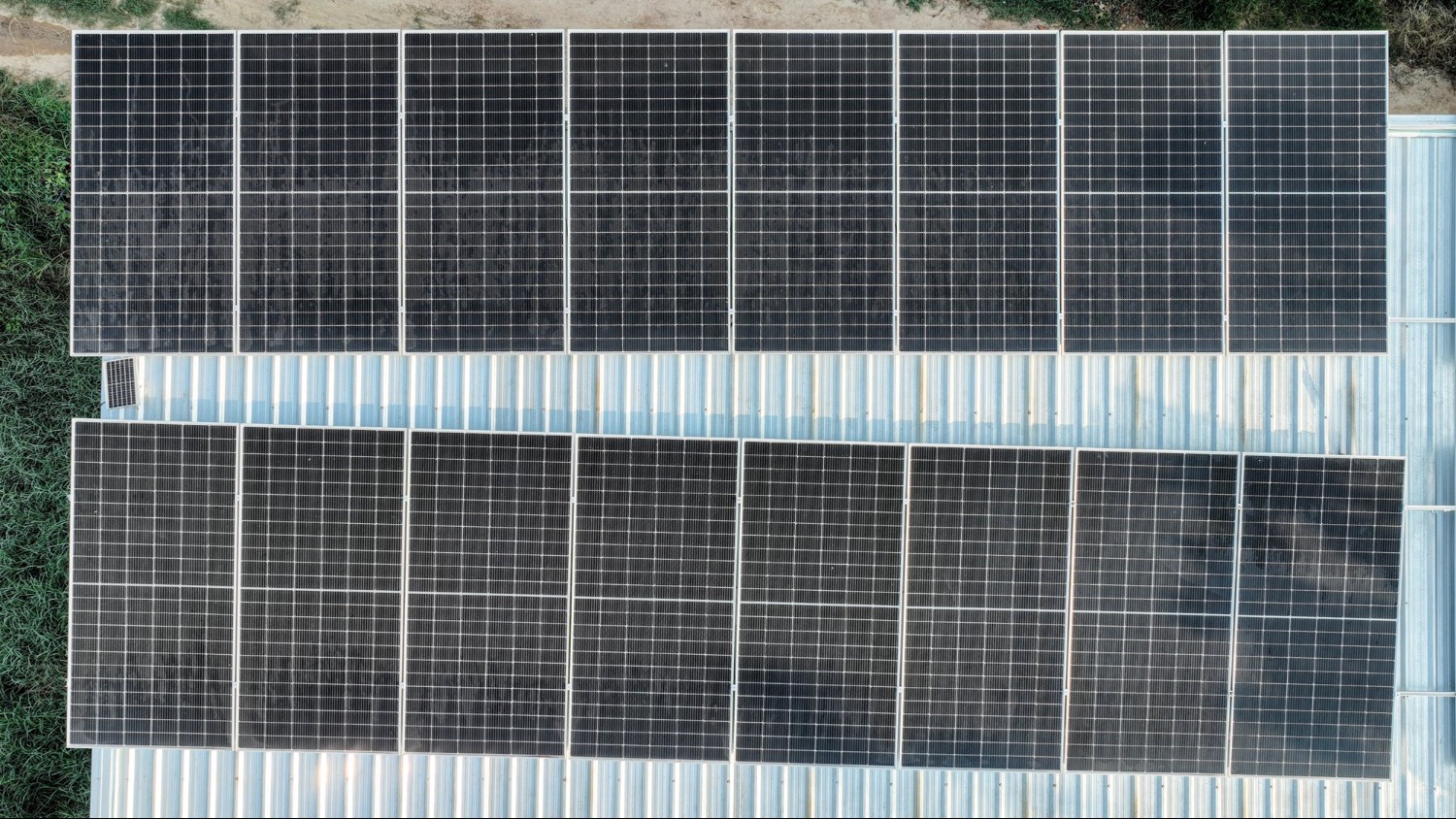
Grid-connected solar is suitable for many properties, but it does not solve every energy challenge. Some locations experience unreliable electricity availability, while others may have limited grid access altogether. In these situations, Off Grid Solar Panel Installation can be evaluated as an independent power solution.
For farms, remote facilities, rural properties, field offices, and selected applications around Nagpur and other parts of Maharashtra, the decision usually depends on reliability requirements rather than solar panels alone.
What Makes an Off-Grid System Different
An off-grid solar system is designed to operate without depending continuously on the conventional electricity network.
Because solar panels generate power primarily during daylight hours, energy storage becomes a major part of the system.
A typical arrangement can include:
- Solar panels
- Charge controller
- Inverter
- Battery bank
- Mounting structures
- Protection equipment
- Wiring
- Monitoring equipment
The batteries store energy that can be used when solar production is insufficient or unavailable.
Battery Sizing Is Critical
With grid-connected solar, the electricity network can often provide additional energy when solar production is low. An independent system does not have that same support.
Battery capacity therefore needs careful calculation.
Important questions include:
- Which appliances must operate?
- How many hours will they run?
- What is their combined electrical load?
- Which loads are essential?
- How much backup is required?
- Are there large starting loads such as pumps?
Simply purchasing a large solar array without accurately calculating storage requirements can create an unbalanced system.
Suitable Applications for Independent Solar
Off-grid installations can be useful where extending conventional electricity infrastructure is difficult, expensive, or impractical.
Possible applications include:
- Agricultural sites
- Remote farm structures
- Small field offices
- Rural facilities
- Security installations
- Selected pumping applications
- Remote equipment
- Locations requiring independent power
The suitability of each project depends on the electrical load and expected operating schedule.
Compare Reliability With Initial Cost
Battery storage adds cost and maintenance considerations compared with a conventional grid-connected arrangement.
Customers should therefore avoid choosing off-grid technology merely because complete energy independence sounds attractive.
Where reliable grid electricity is already available, another solar configuration may sometimes be more practical.
Where grid access is poor, however, the additional investment in storage may solve an important operational problem.
Load Management Improves System Efficiency
Off-grid users benefit from understanding which appliances consume the most electricity.
Heating equipment, large motors, air conditioners, pumps, and other high-load devices can significantly increase the required solar and battery capacity.
Energy-efficient appliances can reduce the size of the system needed to support essential loads.
A load audit before system design is therefore particularly valuable.
Weather Variations Need to Be Considered
Solar generation is not identical every day.
Cloud cover, seasonal changes, dust accumulation, temperature, shading, and other factors affect output. Independent systems should be planned with these variations in mind because there may be no grid supply available to cover an unexpected shortfall.
This is another reason why simplistic calculations based only on panel wattage can be misleading.
Choose the System Around the Requirement
The central question is not whether off-grid technology is better than other solar configurations. It is whether independence from the grid solves a real need at the particular site.
Ms365 Solar Solution assesses solar applications in Nagpur and surrounding regions according to load requirements, installation conditions, and expected usage.
For farms, remote sites, and properties with limited electricity access, a carefully sized off-grid system can provide a practical renewable energy option. Accurate load calculation, appropriate battery capacity, equipment quality, and realistic expectations should guide the decision from the beginning.


